Few design traditions have endured as powerfully as the geometric language of the Mamluk era. Originating in 13th–16th century Egypt and the Levant, Mamluk geometric patterns were born from a sophisticated intersection of mathematics, spirituality, and craft mastery — and today, they are experiencing a remarkable renaissance in contemporary interiors.
Origins: Mathematics as Art
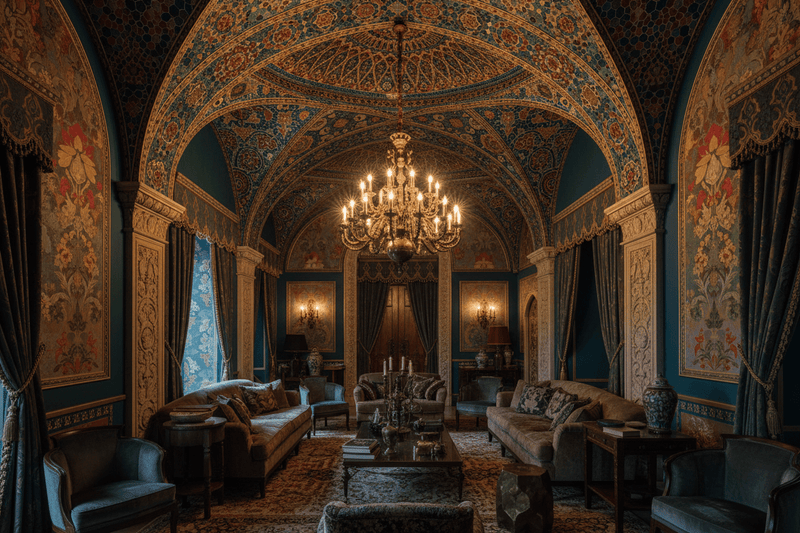
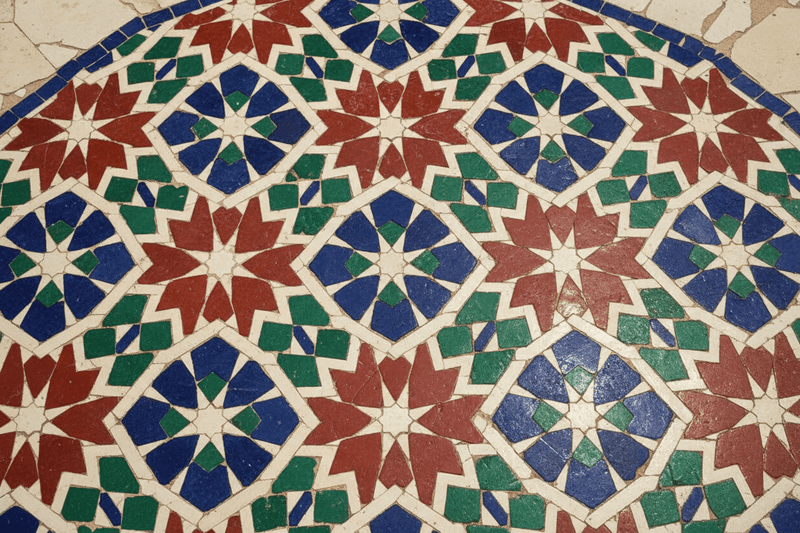
The Mamluk Sultanate (1250–1517) produced some of the most intricate geometric ornamentation the world has ever seen. Craftsmen working in Cairo, Damascus, and Jerusalem developed complex star polygons, interlocking tessellations, and muqarnas vaulting that required extraordinary mathematical precision — centuries before the formal study of geometry in the West caught up.
These patterns were not merely decorative. They carried cosmological meaning: the infinite repeat of a geometric motif symbolised the infinite nature of the divine, while the precision of the craft reflected the order underlying creation.
The Motifs That Define the Tradition
Several signature forms define Mamluk geometric design:
- Eight-pointed stars (khatam) — the most iconic motif, formed by overlapping two squares at 45°
- Interlocking hexagons and dodecagons — creating honeycomb-like fields of infinite depth
- Muqarnas — three-dimensional stalactite vaulting that transforms geometry into architecture
- Arabesque interlace — flowing vegetal lines woven through geometric frameworks
From Mosque to Living Room: The Modern Translation
Contemporary interior designers are drawing directly from this heritage — not as pastiche, but as a serious design language. The appeal is clear: Mamluk geometry offers visual complexity without chaos, rhythm without repetition, and cultural depth without inaccessibility.
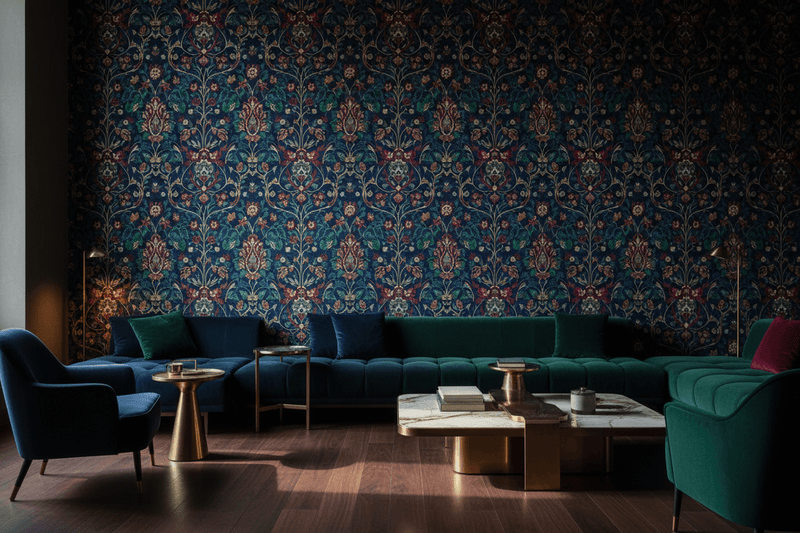
In modern interiors, these patterns appear as statement wall murals, encaustic tile floors, laser-cut screens, and woven textiles. The jewel-toned palette of the original tradition — deep teals, burnt saffron, ivory, and gold — translates beautifully into today's preference for rich, saturated colour stories.
Why It Resonates Now
The current appetite for Mamluk-inspired design reflects a broader cultural shift: a move away from the sterile minimalism of the 2010s toward interiors with narrative, heritage, and soul. Homeowners and designers alike are seeking spaces that tell a story — and few visual traditions carry as rich a story as the geometric legacy of the Mamluk world.
At Carta Noor, our geometric mural collections draw directly from this lineage, reinterpreted for contemporary non-woven substrates and printed with HP Latex inks for archival longevity. Each design is a conversation between a 700-year-old tradition and the walls of a modern home.